Phunction.io
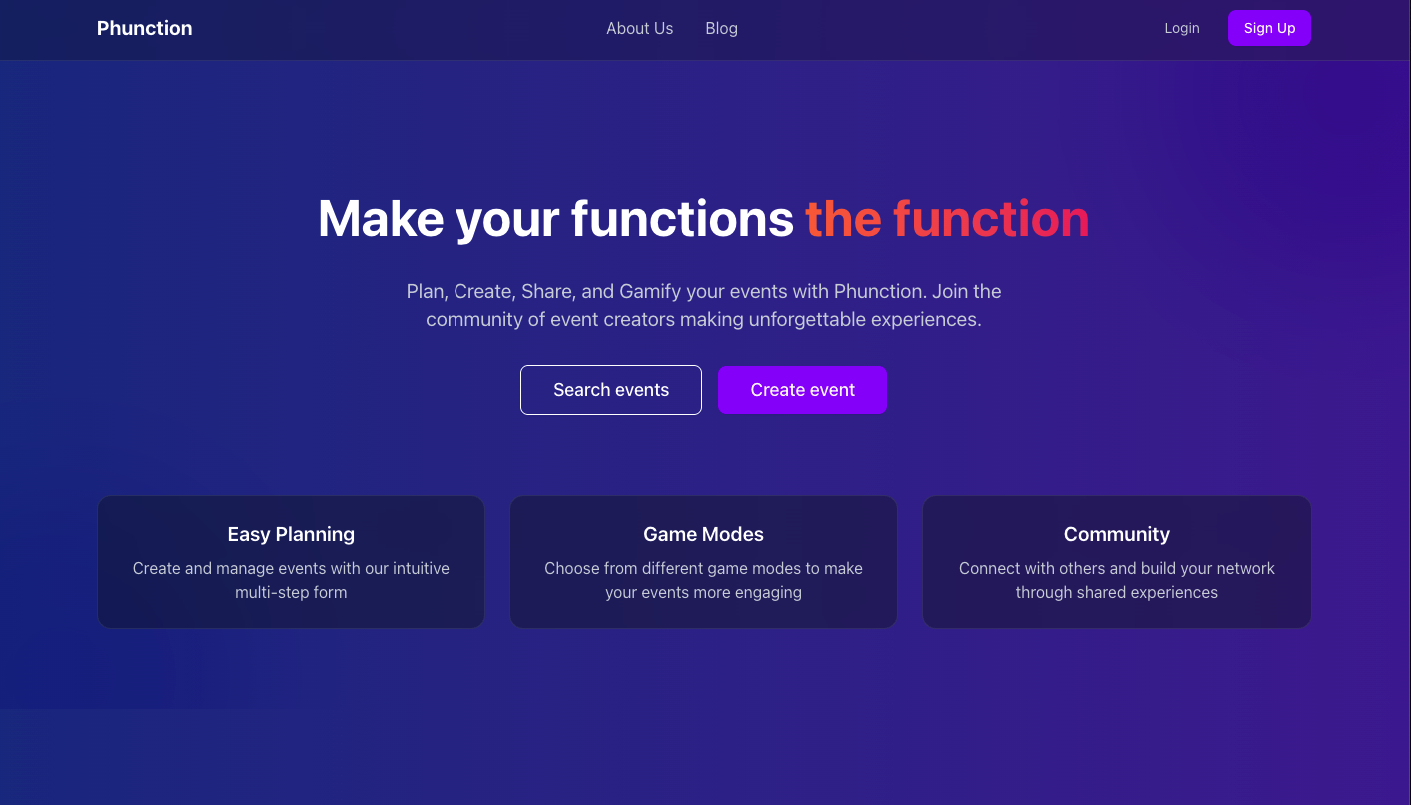
Turning a friendly rivalry into a gamified event-tracking app that friend groups actually keep opening.
The problem
A friend from undergrad and I were competitive about one thing at every event we went to: who met more people. The catch: he lived five hours away, so there was no easy way to track or compare in the moment. Existing event apps were built for RSVPs and ticketing, not for lightweight, real-time social bragging rights.
The opportunity: a fast, fun way to log connections live, and see how you stack up against friends, without turning it into another heavyweight events app.
Users & early signal
Before writing code, I ran the idea past the friend group it was built for. The signal was clear: people wanted something they'd actually open during an event, not fill out after the fact. That single insight drove the mobile-first, low-friction direction over a more "complete" event-planning platform.
Key decisions
Check-ins happen live, on a phone, at a loud event. I cut anything that didn't serve that single moment, even at the cost of a leaner v1.
Levels, streaks, and a leaderboard turned a one-off utility into something people opened between events, but it introduced a new problem: users trying to game their own level.
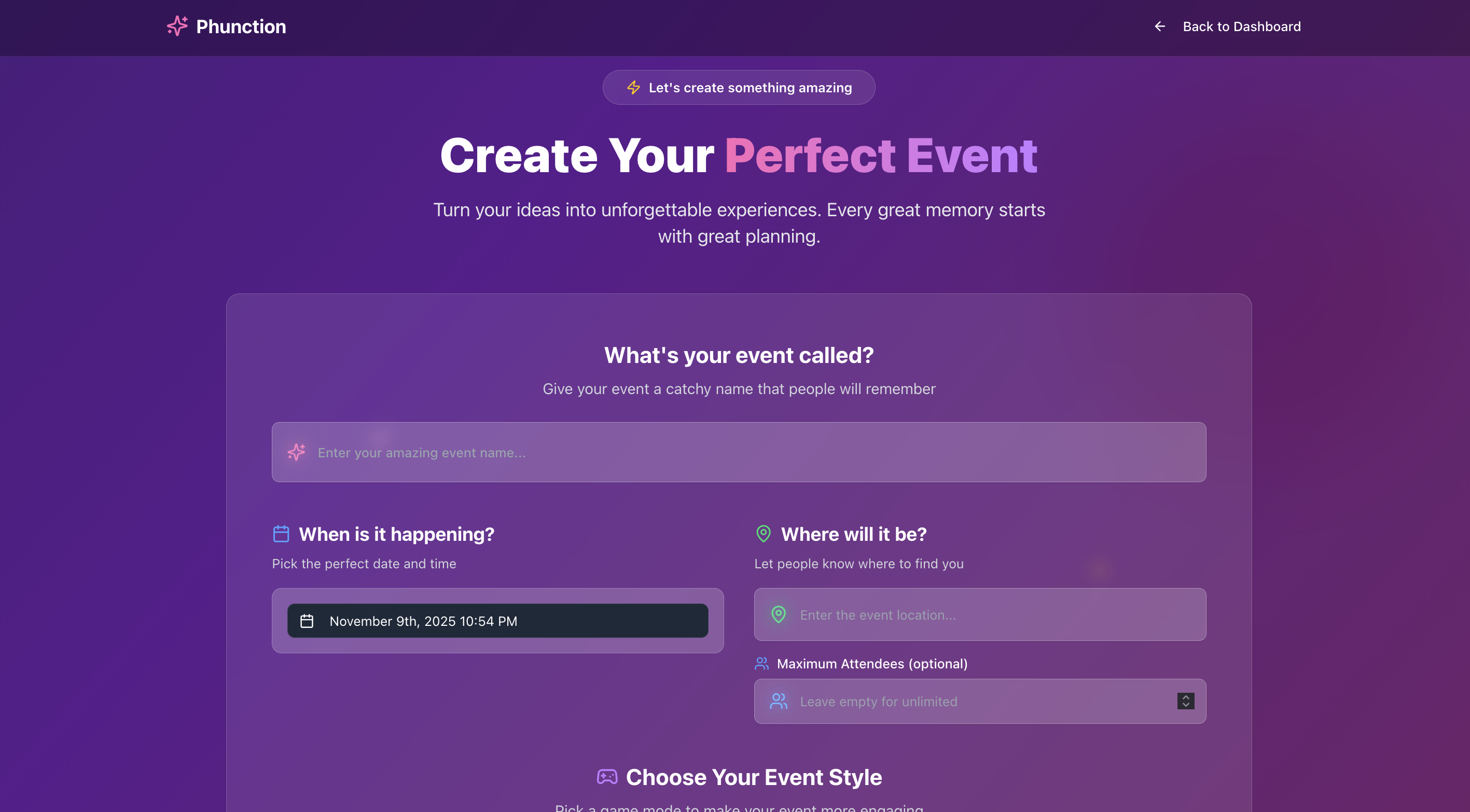
Once the core loop proved sticky, I paused new features for a v2 rebuild on a cleaner architecture: a deliberate trade of short-term velocity for a roadmap I could actually keep shipping against.
Outcome
Directional metrics from an early beta cohort. Phunction is still pre-scale.
What I'd do differently
- Pick a relational database over Firebase from day one to avoid vendor lock-in.
- Design the landing page alongside the product, not after: first-impression conversion mattered more than expected.
- Design the leveling system with abuse cases in mind from the start, not bolted on after launch.